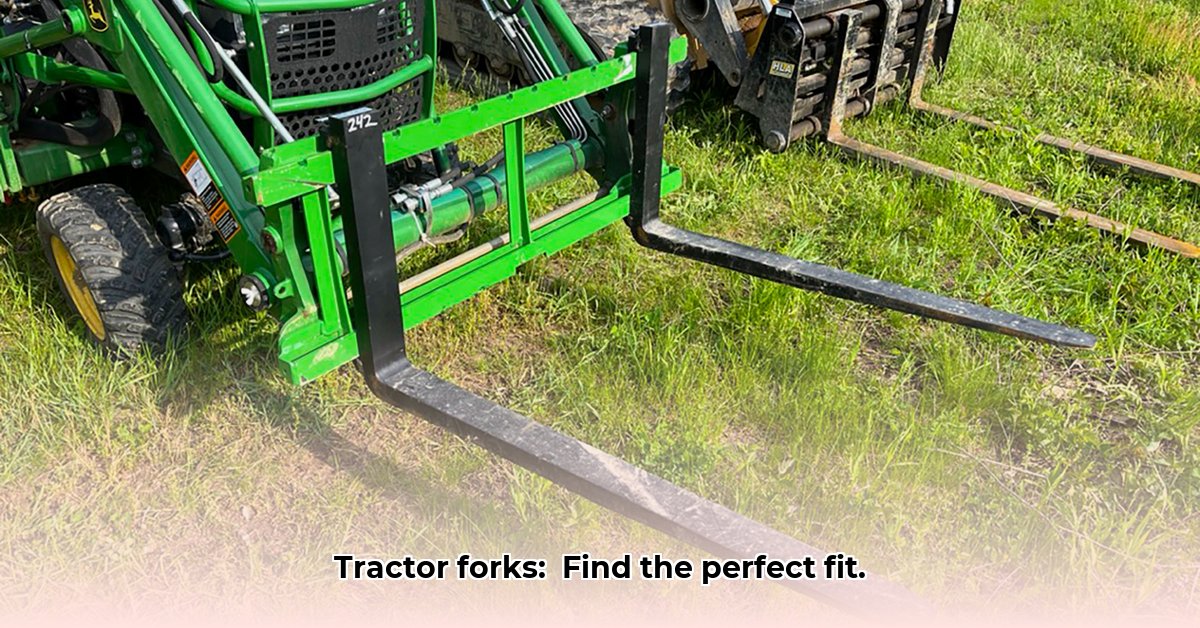
Picking the right tractor forks significantly impacts farm efficiency. This guide helps you choose, use, and maintain them effectively, covering various fork types, safety, and sustainability. For enhanced tractor control, explore advanced joystick kits.
Assessing Your Needs: The Foundation of Selection
Before purchasing, carefully consider your typical loads. What materials will you primarily lift? Hay bales? Logs? Pallets? Knowing the weight and dimensions of common loads determines the required fork capacity and size. Will you be working in challenging terrains requiring extra-robust forks? Understanding your workload is the first step towards making an informed decision. What is the maximum weight you anticipate lifting?
Types of Tractor Forks: A Detailed Overview
Several fork types cater to specific needs:
- Pallet Forks: These are designed for handling standard-sized pallets, offering versatility for common agricultural tasks.
- Heavy-Duty Forks: Built for extremely heavy lifting, these forks provide superior strength and durability for demanding applications.
- Specialized Forks: This category includes forks designed for specific materials or tasks, such as log forks, long-item forks, or those suited for handling awkwardly shaped bales.
What types of materials will you be regularly handling? Selecting the appropriate fork type based on your typical load will ensure both efficiency and safety.
Choosing the Right Size and Capacity: Safety First
Never exceed your tractor's rated lift capacity. Consult your tractor's manual for safe lifting limits. Incorrectly sized forks can lead to instability, accidents, and potential damage to your tractor and equipment. Always prioritize safety when making this decision. What is your tractor's maximum lift capacity?
Understanding Mounting Systems: Ensuring Compatibility
Various mounting systems exist, each affecting compatibility:
- Universal Skid Steer Attachments: These offer adaptability across different tractor models, enhancing flexibility and potential cost savings.
- Manufacturer-Specific Mounts: Designed for specific tractor brands (e.g., John Deere), these mounts provide a precise fit, but might limit options.
Compatibility between the forks and your tractor’s mounting system is crucial for safe and efficient operation. What mounting system does your tractor utilize?
Durability and Materials: A Long-Term Investment
High-quality forks, made from robust materials like Hardox 450 steel, offer superior strength, enhanced durability, and a longer lifespan. While initial costs might be higher, increased longevity often translates to cost savings in the long run. What is the expected frequency of use for your tractor forks?
Safety Precautions: Prioritizing Safe Operation
Safe operation is paramount. Always consult your tractor's safety guidelines before use. Adequate training is essential. Never exceed the rated capacity of the forks or your tractor. Using counterweights can enhance stability, especially when handling uneven loads. Regularly inspect forks for damage. What safety measures do you currently employ when operating heavy machinery?
Maintenance: Preserving Fork Performance and Lifespan
Regular maintenance preserves your forks' performance and extends their lifespan. Regularly inspect for cracks, bends, and wear on tines. Lubricate moving parts according to the manufacturer's instructions. Addressing minor issues promptly prevents major problems. What is your current maintenance schedule for your farm equipment?
Sustainability Considerations: Environmental Responsibility
Consider the environmental impact when choosing forks. Manufacturers committed to recycled materials and prioritizing durability reduce waste. Efficient material handling translates to lower fuel consumption. What sustainability practices do you currently implement on your farm?
Fork Material Comparison
| Material | Advantages | Disadvantages |
|---|---|---|
| Hardox 450 Steel | Exceptional strength, extended lifespan | Higher initial cost |
| Other Steels | Lower initial cost | Reduced strength and durability compared to Hardox 450 |
Selecting the right tractor forks depends on your individual needs and priorities. By carefully considering factors such as load capacity, mounting systems, material durability, and sustainability, you can make an informed decision improving efficiency and safety. Thorough research is key to a rewarding investment.
Key Takeaways:
- Capacity Matching: Never exceed your tractor's lift capacity.
- Size Selection: Choose forks that match your typical load dimensions.
- Hitch Compatibility: Ensure your forks’ hitch system matches your tractor's.
- Durability Matters: Invest in high-quality materials for longevity.
- Safety First: Always prioritize safe operating procedures.
- Sustainability: Consider the environmental impact of your choice.